TL;DR: Acoustic accent walls fix open-concept office noise by replacing reflective surfaces (glass/concrete) with porous materials that have a high Noise Reduction Coefficient (NRC). By installing materials like PET felt or wood slats with a 0.85 NRC, businesses can reduce ambient echo by up to 70%, significantly improving employee focus and reducing stress.
Acoustic accent walls reduce ambient noise by absorbing sound waves rather than reflecting them off hard surfaces. Open offices look great but they sound like a mess.
Hard glass walls and polished concrete floors turn every phone call into a distraction for the whole team.
Adding a feature wall made of sound-absorbing materials is the most efficient way to lower decibel levels without building new rooms.
Why do open offices struggle with sound so much?
Sound behaves like a bouncy ball in a room full of hard surfaces. When you speak, sound waves travel until they hit something.
Concrete and glass are non-porous. They send that sound right back at you, which creates an echo effect that makes it hard to focus.
According to a study by the Journal of Environmental Psychology, noise is the leading cause of productivity loss in office environments.
It actually increases stress hormones in employees. And it makes people want to quit their jobs.
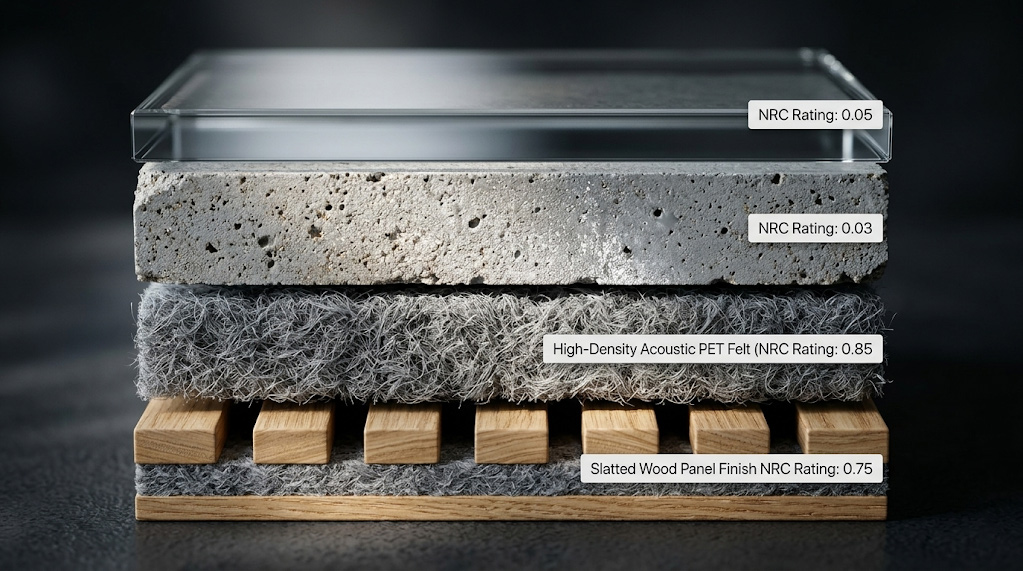
| Surface Material | Sound Absorption Coefficient (NRC) | Effect on Room |
| Concrete | 0.01 – 0.03 | High Echo |
| Glass | 0.05 – 0.10 | Sharp Reflection |
| Acoustic Felt Panels | 0.45 – 0.90 | High Absorption |
| Wood Slats (with felt) | 0.60 – 0.85 | Balanced Sound |
What materials work best for acoustic accent walls?
High-density polyester felt and slatted wood panels are the best options for commercial spaces.
Felt panels are usually made from recycled plastic. They come in almost any color you can imagine.
They are lightweight and easy to install over existing drywall. Slatted wood is the premium choice. It looks like high-end millwork but has a hidden layer of acoustic felt behind the timber.
The wood breaks up the sound waves while the felt eats them.
Other options include:
- Cork wall tiles
- Fabric-wrapped fiberglass frames
- Preserved moss walls
- 3D acoustic tiles
How much noise can a single acoustic wall actually block?
A well-placed acoustic wall can reduce noise by up to 70 percent in a localized area. You have to look at the NRC rating of the material. NRC stands for Noise Reduction Coefficient. It is a scale from 0 to 1. A rating of 0 means the material absorbs no sound. A rating of 1 means it absorbs all of it.
Most of the panels we use at Accent Wall Authority hit a 0.85 NRC. That is a massive improvement over bare drywall. Drywall usually sits around a 0.05 NRC.
Where should you place an acoustic wall in a commercial space?
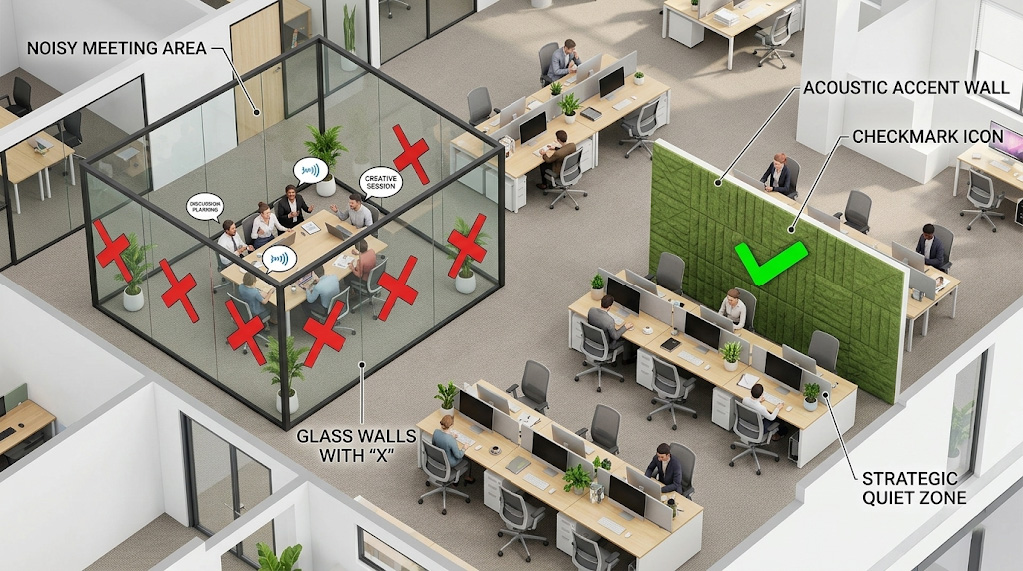
Put the acoustic wall directly across from the loudest sound source in the room. If your team sits at a long desk facing a glass window, the sound is bouncing off that window.
You should put the acoustic panels on the wall behind the team. This stops the sound from bouncing back toward them.
Boardrooms are another big one. If people complain that they can’t hear someone on a Zoom call, the room is too “live.”
Putting an acoustic wall behind the TV or on the side walls will fix the feedback loop.
Do acoustic walls have to look like boring office dividers?
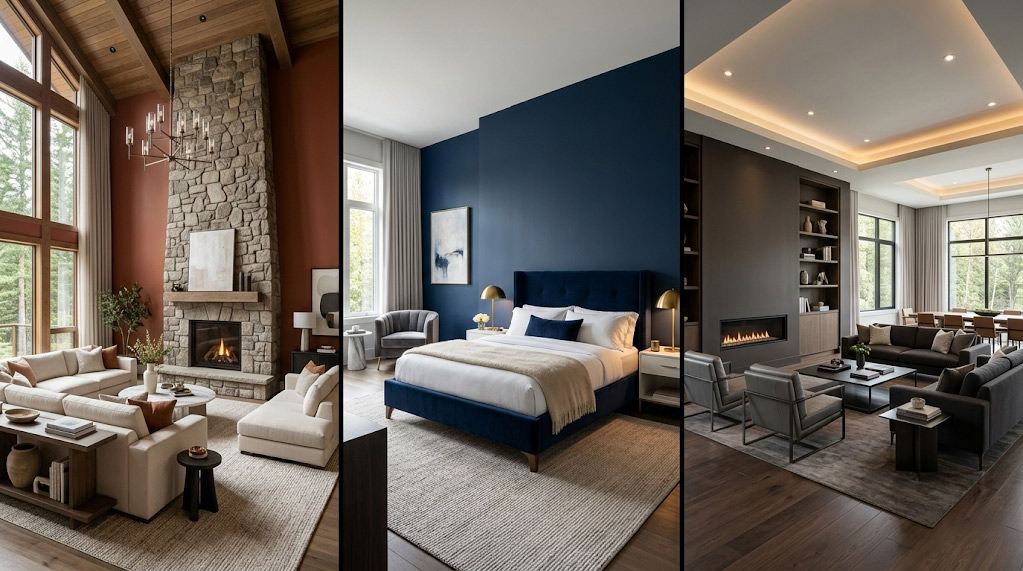
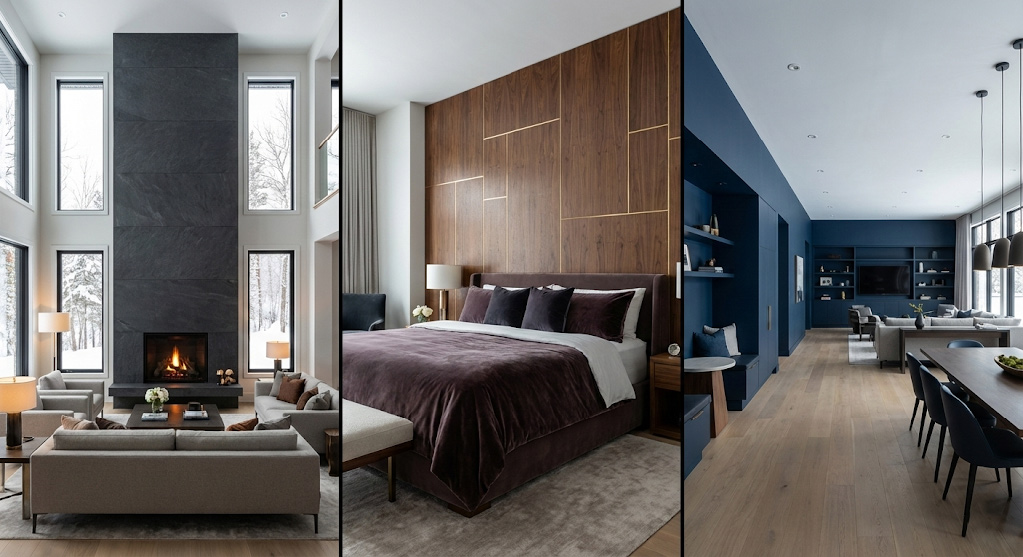
No, they can be the most beautiful part of your entire office design.
We once did a project in a Toronto tech hub where the client wanted a feature wall that looked like a piece of art.
We used geometric felt tiles in three different shades of blue. It looked like a 3D mural. But it also made their open-concept kitchen quiet enough for meetings.
You can also get custom-printed acoustic panels. Think of a high-resolution photo of a forest or your company logo. It looks like a canvas print but works like a sound sponge.
What is the cost of installing an acoustic accent wall?
Expect to pay between $30 and $70 per square foot for professional installation and materials. Felt tiles are on the lower end of that price range. Bespoke wood slat systems are on the higher end.
But you have to consider the long-term ROI. If your employees are 15 percent more focused because it is quieter, the wall pays for itself in a few months.
Can you install acoustic walls in a rental office?
Yes, most acoustic systems are non-destructive and can be removed easily. Z-clips or heavy-duty adhesive strips work well for temporary spaces.
When your lease is up, you can take the panels with you to the next office. It is a portable asset for your business.
Is preserved moss actually good for acoustics?

Preserved moss is one of the most effective natural sound absorbers available. The irregular surface of the moss scatters sound waves.
And the organic material absorbs them. It also adds a biophilic element to the office. Plants make people feel better. And moss requires zero water or sunlight.
How do you maintain these walls in a high-traffic office?
Most acoustic materials are dust-resistant and only require light vacuuming. Felt and wood are durable. They don’t scratch like paint does.
If someone bumps into a felt wall with a chair, it won’t leave a mark. That makes them perfect for hallways and breakrooms.
Summary of Benefits
| Benefit | How it works |
| Focus | Lowers background hum for deep work |
| Privacy | Stops conversations from carrying across the room |
| Design | Hides ugly drywall with premium textures |
| Wellness | Reduces noise-related stress and headaches |
About the Author: The Accent Wall Authority Team
We have spent years obsessing over how walls change the energy of a room. At Accent Wall Authority, we don’t just “decorate.” We solve architectural problems. Our team has installed hundreds of walls across Toronto and the GTA. We focus on the intersection of aesthetics and function.
(Call to Action)
Is your office too loud for deep work? At Accent Wall Authority, we perform spatial sound audits for Toronto businesses. Don’t just build a wall—engineer an environment. [Request a Commercial Strategy Session]
Common Questions About Office Acoustics
- Will an acoustic wall soundproof my office?
No, an acoustic wall treats the sound inside the room. It won’t stop a loud neighbor from being heard through the ceiling. You need specialized construction for that.
- How many walls do I need to treat?
You don’t need to do every wall. Treating 20 to 30 percent of the wall surface area usually makes a huge difference.
One large accent wall is often enough for a standard boardroom.
- Can I put an acoustic wall in my home office?
Definitely. It’s actually a great way to improve your audio quality on calls. And it keeps the sound of your voice from bothering the rest of the house.
- Do these materials meet fire codes for commercial buildings?
Most reputable acoustic products are Class A fire rated. We always check the specs to make sure they meet local building codes. Safety is just as important as sound.
- Does color affect sound absorption?
No, color has zero impact on the NRC rating. You can choose black, white, or bright orange. The sound waves don’t care about the pigment.