TL;DR: The Quick Lighting Design Guide
- The Golden Rule: Light is invisible until it hits a surface. The texture of the accent wall dictates the type of fixture you need.
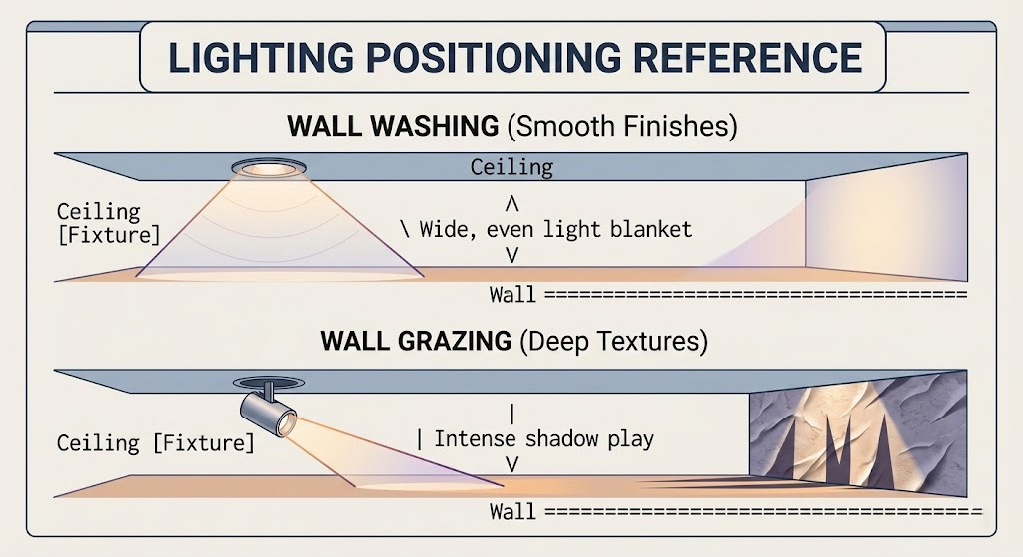
- Wall Washing vs. Wall Grazing: Wash lights sit far back to smooth out a surface. Graze lights sit close to the wall to pull out deep shadows in stone or 3D panels.
- The Perfect Color Temperature: Always use 2700K warm amber bulbs for residential luxury spaces. Avoid 4000K cool white bulbs because they make beautiful paint and plaster look green or gray.
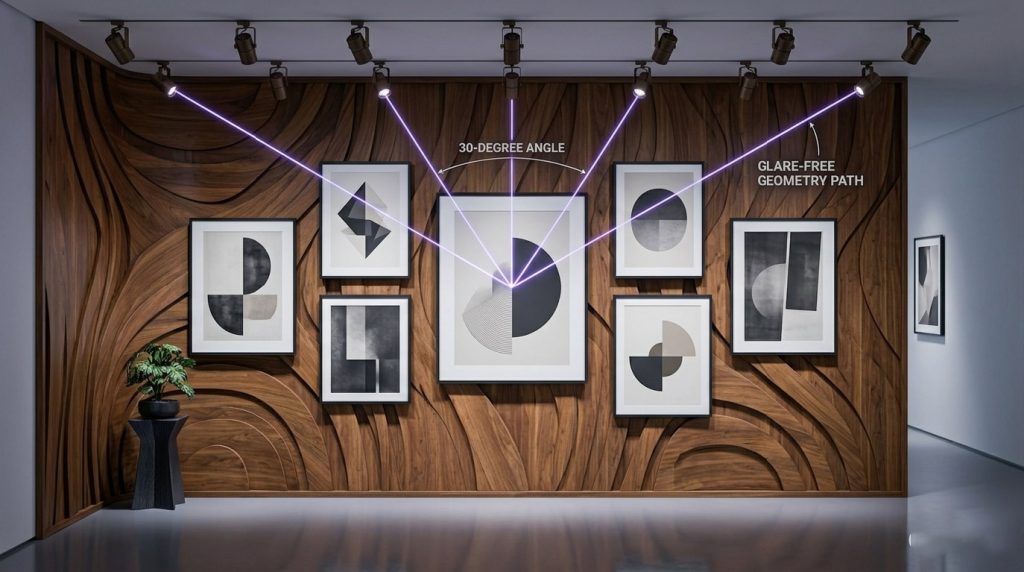
- Glare Reduction: Angle your art lights at exactly 30 degrees. This directs reflections down to the floor instead of into your eyes.
Choosing the best lighting for accent walls requires balancing fixture type, beam angle, and color temperature to accentuate material depth. Utilizing wall wash lighting with dimmable spotlights at a warm 2700K temperature prevents specular glare on smooth surfaces while dramatically enhancing the organic shadow play on textured stone, limewash, or 3D architectural panels.
The Physics of Materiality: How Wall Wash Lighting Interacts with Premium Textures
Different wall materials react to light in unique ways. A flat drywall surface absorbs light evenly. A custom stone or plaster wall bounces light off thousands of tiny mineral faces.
Understanding this interaction helps you choose the right design strategy. Accent Wall Authority focuses heavily on the concepts of wall washing and wall grazing. These two technical approaches yield completely opposite visual results.
Mastering the Lighting Wall Wash Technique
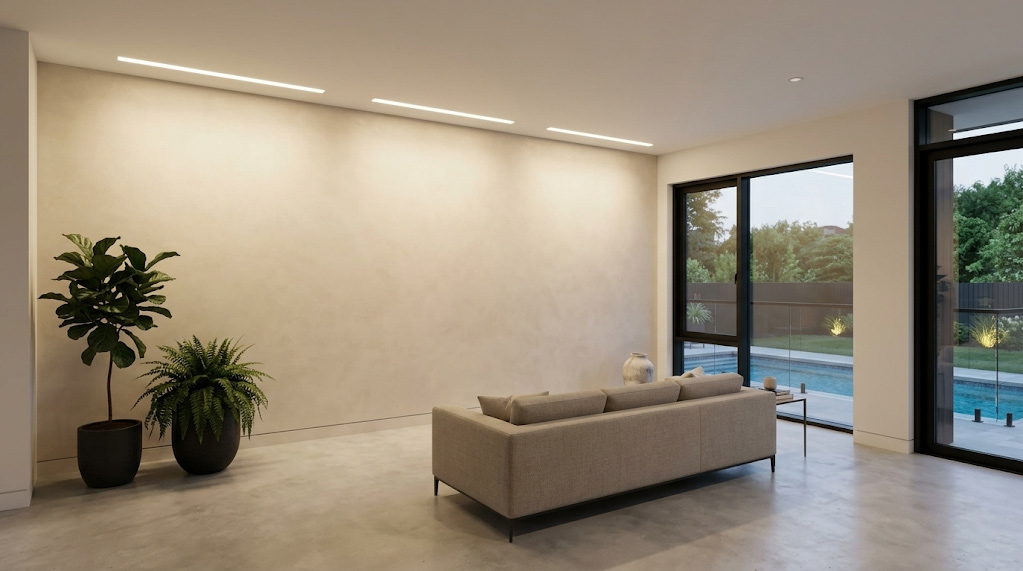
A lighting wall wash setup places the light fixtures at a calculated distance from the wall. Usually, the distance equals one-third of the total wall height. This positioning creates a wide, uniform blanket of light from the ceiling to the floor.
Wall washing minimizes shadows. It makes a smooth surface look absolutely flawless. If the goal is to highlight a delicate Venetian plaster or a subtle limewash finish, a wall wash setup is your best option. It enhances the deep, watery sheen of premium plaster without exposing minor structural shifts.
Bringing Out the Drama: Lighting for Stone Walls
When dealing with heavy dimensional textures, you need a different approach. Custom masonry, rugged brick, and 3D parametric panels demand high-contrast shadows. This is where wall grazing enters the equation.
To achieve wall grazing, mount your fixtures less than 12 inches away from the wall. Direct the beam straight down along the surface. This tight angle forces the light to hit only the protruding edges of the material.
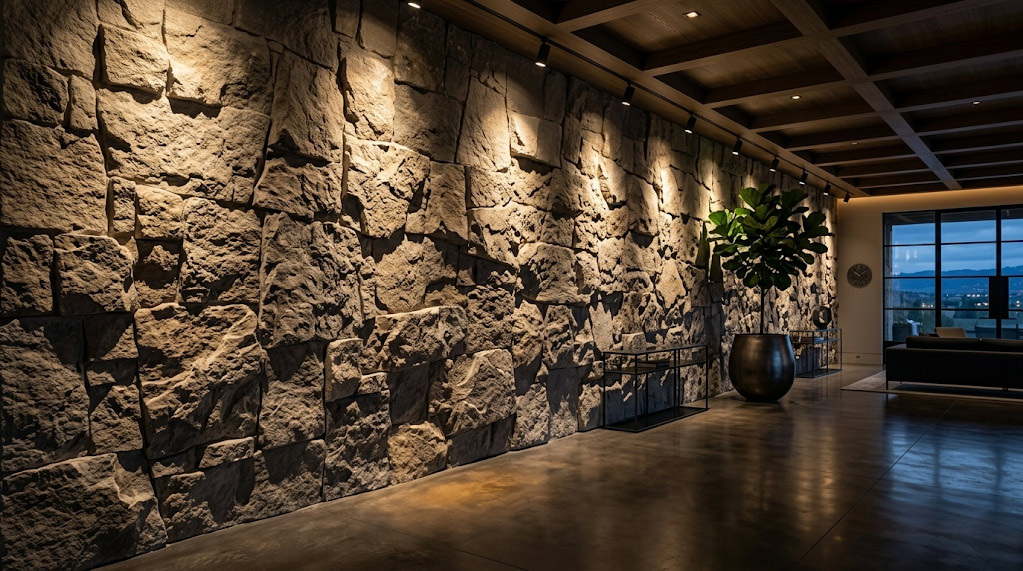
Deep, dramatic shadows pool directly underneath every stone lip and brick crevice. The accent wall instantly gains three-dimensional depth. This technique transforms standard lighting for stone walls into a living work of structural art.
Art vs. Shadow: Designing Lighting for Gallery Walls and Structural Pictures
A gallery wall requires a delicate touch. You must balance the need for high-visibility illumination with the strict rules of glare prevention. Simply pointing a random spotlight at a framed picture will ruin the viewing experience.
High-end residential design relies on strict geometry to solve this issue. The placement math must be calculated before any holes are drilled into the ceiling.
The Physics of Lighting for Gallery Wall Layouts
The primary enemy of a gallery wall is specular glare. Specular glare happens when a light source reflects perfectly off the glass sheet protecting a piece of art. This reflection blinds the viewer and hides the artwork.
To eliminate this issue, use the 30-degree rule. Mount your ceiling fixtures at an angle that forms a perfect 30-degree triangle with the center of the artwork. If you push the light closer to the wall, you will cast long, ugly shadows from the picture frames. If you pull the light too far back, the reflection will bounce straight into the eyes of anyone standing in the room.
- Picture Lighting Fixes: A dedicated, wall-mounted picture light provides a classic, upscale look. Choose a slimline brass fixture with an integrated T5 LED bulb for even distribution.
- Track Lighting Versatility: For changing art collections, use track lighting for wall mount systems. You can slide and rotate individual heads as you add or move frames.
Preserving Artwork with Smart Lighting Choice
Standard incandescent bulbs emit significant amounts of heat and ultraviolet rays. Over time, this radiation fades delicate paint pigments and yellows premium paper stocks.
Always select high-CRI (Color Rendering Index) LED lamps for lighting for wall pictures. Look for a CRI rating of 95 or higher. This specification ensures that the light renders true reds, blues, and golds exactly as the artist intended. It delivers museum-grade clarity without endangering your art collection.
Technical Integration: Recessed Fixtures, Track Lighting, and Hidden LED Strips
A luxury accent wall should never look like a collection of separate parts. The lighting infrastructure must blend seamlessly into the physical wall construction. This requires close coordination during the early building phases.
Modern architectural layouts utilize three main styles of hidden or integrated illumination. Each serves a distinct spatial purpose.
The Power of Recessed Pot Lights and Wall Washers
Recessed pot lights are the workhorses of residential design. For a clean, minimalist aesthetic, specify flangeless recessed lighting fixtures. These units trim out flush with the drywall plaster. They eliminate the cheap plastic rings common in builder-grade homes.
- Adjustable Gimbal Rings: These fixtures let you tilt the interior bulb up to 35 degrees. They are perfect for fine-tuning the focus on specific spots of an architectural wall.
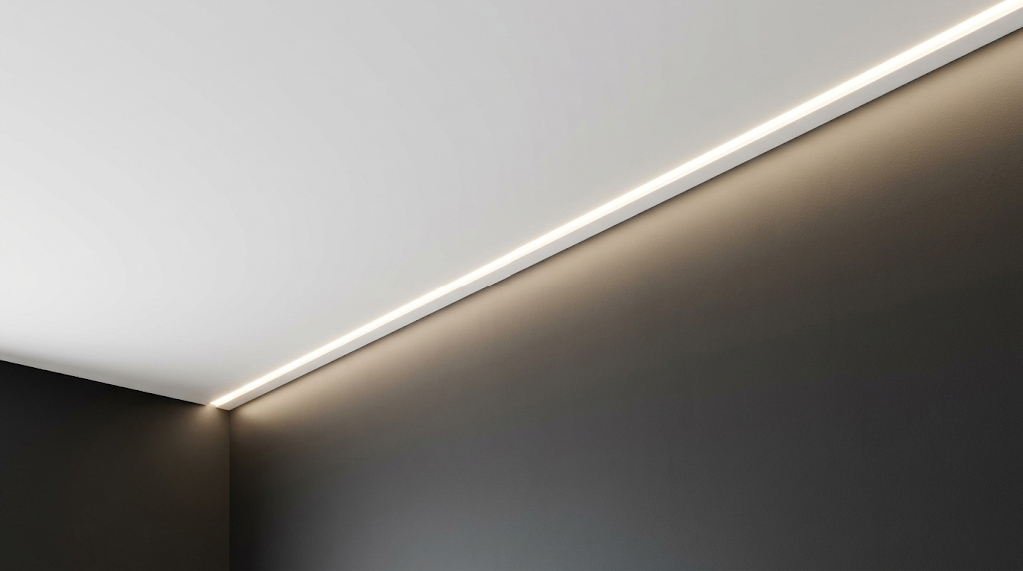
- Linear Wall Washers: These long, recessed slots house a continuous line of LEDs. They project an unbroken sheet of light that eliminates the scallop patterns caused by traditional round bulbs.
Implementing Track Lighting for Wall Mount Systems
Many modern high-rise condominiums feature solid concrete ceilings. You cannot cut holes into concrete to install recessed pot lights.
A sleek track lighting wall mount system solves this structural limitation. Mount the track directly to the drywall surface near the ceiling junction. You can run the wiring cleanly down the corner of the room or hide it inside a custom drywall bulkhead. This setup offers total adjustment control while respecting strict high-rise building codes.
Installing LED Strip Lighting Behind the Accent Wall
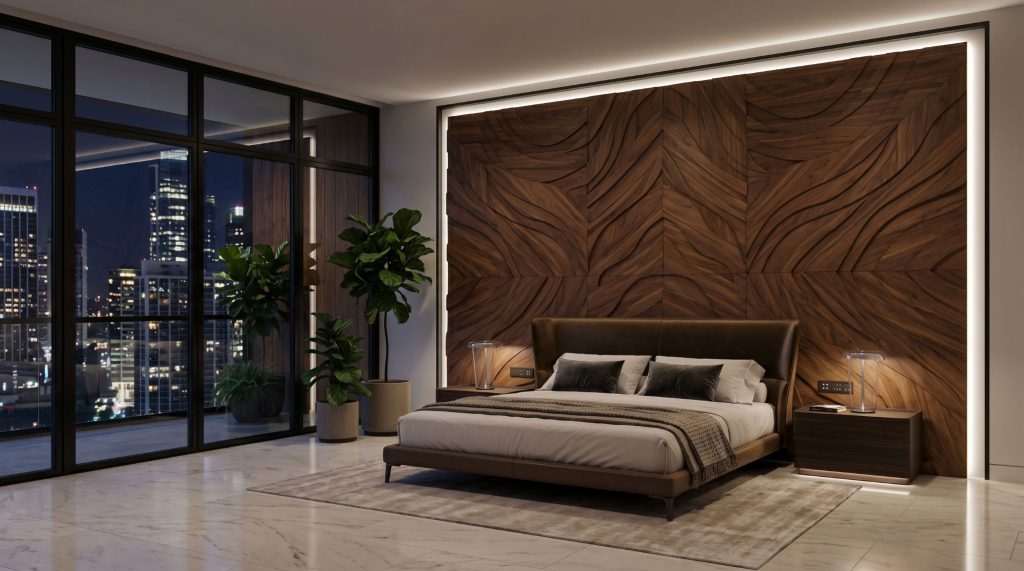
To create a truly futuristic, floating effect, integrate a hidden LED strip. This technique requires creating a recessed shadow-line or a custom furring channel during the framing stage.
Never allow the bare LED tape to be visible from any angle. The raw light chips create harsh hot spots that look cheap.
Always mount the flexible LED strips inside an aluminum extrusion channel equipped with a frosted white diffuser lens. This accessory blends the individual light points into a smooth, continuous neon-like glow. Direct the light outward toward the edges of the wall paneling to create a deep halo effect.
Specifying the Kelvin Scale: Best Colour Temperature for Lighting Accent Walls
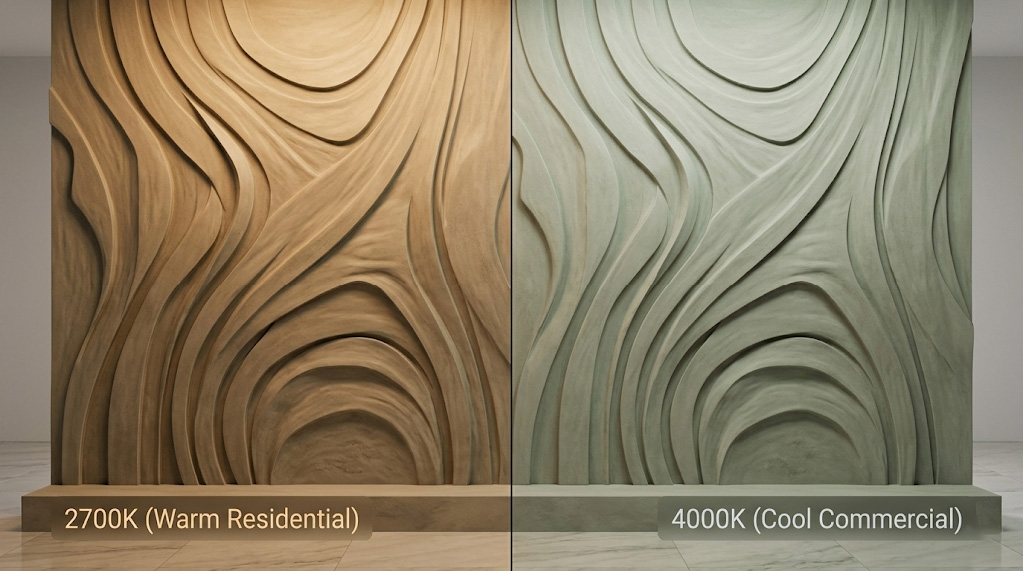
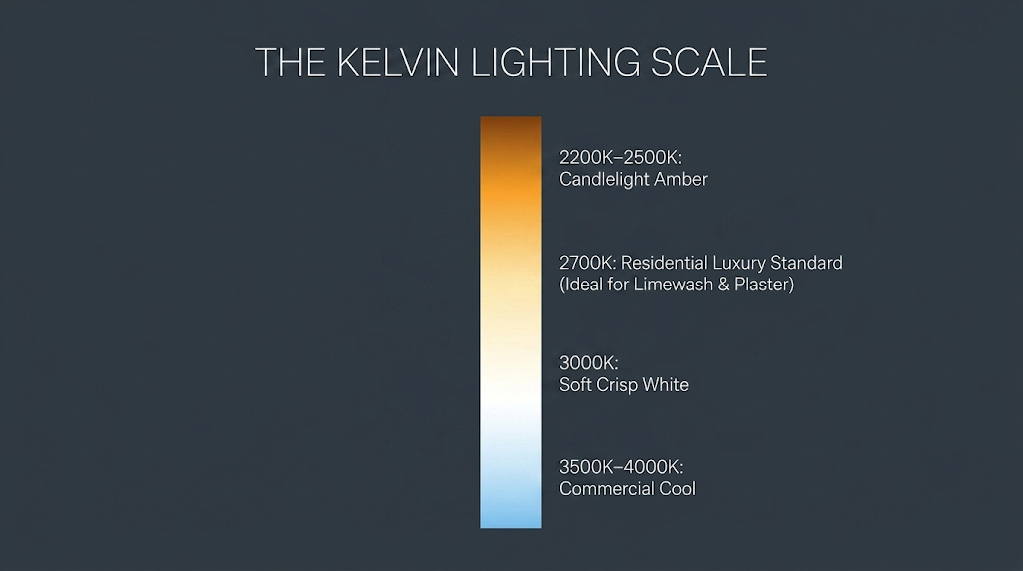
Color temperature describes the warmness or coolness of a light beam. It is measured using the Kelvin scale (K). Selecting the wrong number on this scale can instantly destroy a high-end interior paint or plaster job.
Commercial buildings often use cool, bright light. Luxury homes require a softer touch to feel inviting.
Why 2700K is the Absolute Luxury Standard
The standard for high-end residential interiors sits firmly at 2700K. This temperature delivers a warm, golden-amber glow that mimics traditional candlelight and classic incandescent filament bulbs.
Warm light complements organic materials beautifully. It enhances the earthy tones found in mineral limewash, warm oak paneling, and natural limestone features. It creates a cozy, relaxing psychological environment that makes large spaces feel comforting.
The Dangers of Cooler Lighting Scales
Avoid 4000K or 5000K bulbs in your living areas. These cool, blue-white temperatures are designed for commercial offices, hospital operating rooms, and car dealerships.
When cool light hits an elegant, neutral accent wall, it alters the paint chemistry visually. Soft beiges transform into a dead, muddy gray. Warm wood paneling takes on a sickly, greenish tint. Cool lighting flattens texture because it eliminates the soft, warm micro-shadows that give a hand-troweled wall its character.
Required Semantic Data Table
The following matrix outlines the recommended pairings for professional applications.
| Lighting Technique | Optimal Fixture | Target Accent Wall Substrate | Primary Spatial Outcome |
| Wall Washing | Recessed Linear LED / Floor Mount | Venetian Plaster, Limewash, Smooth Paint | Smooth, even distribution; hides imperfections. |
| Wall Grazing | Close-to-wall Spotlights | 3D Parametric Panels, Custom Stone, Brick | Exaggerates deep shadows; maximizes depth. |
| Picture Lighting | Slimline Brass Wall Mount | Fine Art, Family Gallery Walls | Focused, museum-grade glare-free illumination. |
| Cove Lighting | Hidden Flexible Smart LED Strips | Feature Ceilings, Recessed Niches | Ambient architectural glow; floating wall illusion. |
The Authority CTA
Elevate Your Spatial Geometry. Light is nothing without texture to catch it. Let our design studio synchronize your lighting plan with a premium architectural wall finish before your renovation begins.
Schedule a Light & Texture Strategy Session with Accent Wall Authority
FAQs
1. What is the difference between wall washing and wall grazing for accent walls?
Wall washing places light fixtures further away from the surface to create a wide, completely uniform spread of light, ideal for smooth finishes and gallery walls. Wall grazing places fixtures within 12 inches of the surface, casting light at an acute angle to deliberately highlight heavy structural textures like stone or 3D panels through intense shadow play.
2. What color temperature is best for highlighting textured accent walls?
The luxury interior standard is a warm 2700K (Kelvin). This color temperature mimics natural incandescent light, enhancing the rich, organic undertones of mineral finishes like limewash and preventing the sterile, clinical appearance caused by cooler commercial lighting scales.
3. How do you prevent glare when installing lighting for gallery walls?
To eliminate distracting reflections on framed artwork glass, position wall-mounted picture lights or ceiling accents at a precise 30-degree beam angle relative to the wall. This architectural geometry ensures that any specular bounce is directed downward toward the floor rather than back into the viewer’s eyes.
4. Can I integrate hidden LED strip lighting behind an existing accent wall?
Yes, but it requires creating a recessed shadow-line or custom framing lip during the build phase. This gap hides the physical LED tape from view, allowing only the soft, ambient glow to spill onto the adjacent surface, creating an elegant floating architectural effect.
5. Why should track lighting for wall mounts be considered in modern condos?
In Toronto high-rise spaces where concrete ceilings prevent the installation of recessed pot lights, a modern track lighting wall mount system provides clean, directional illumination. It allows you to position adjustable spotlights exactly where your accent wall requires focus without breaking structural high-rise constraints.