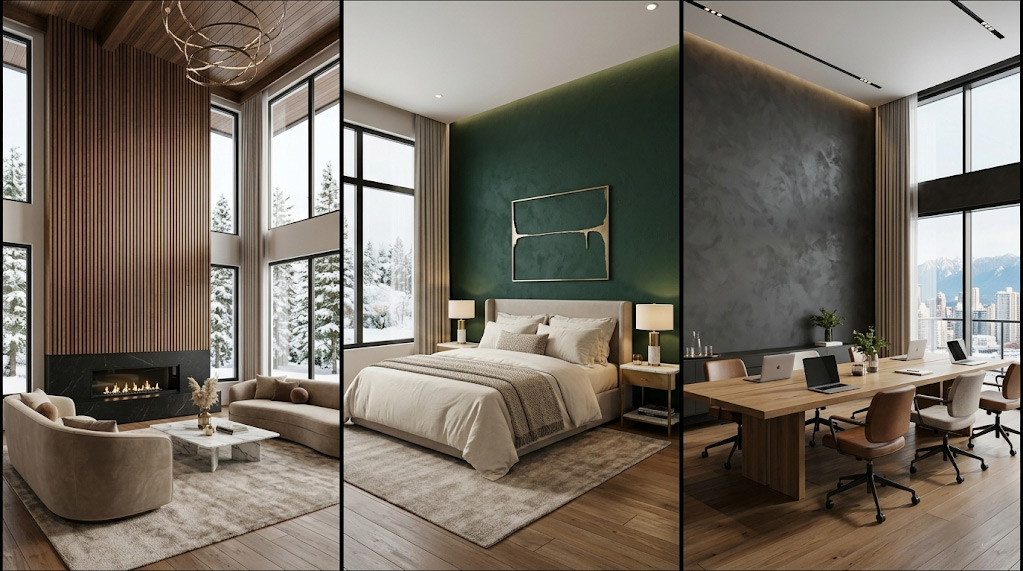
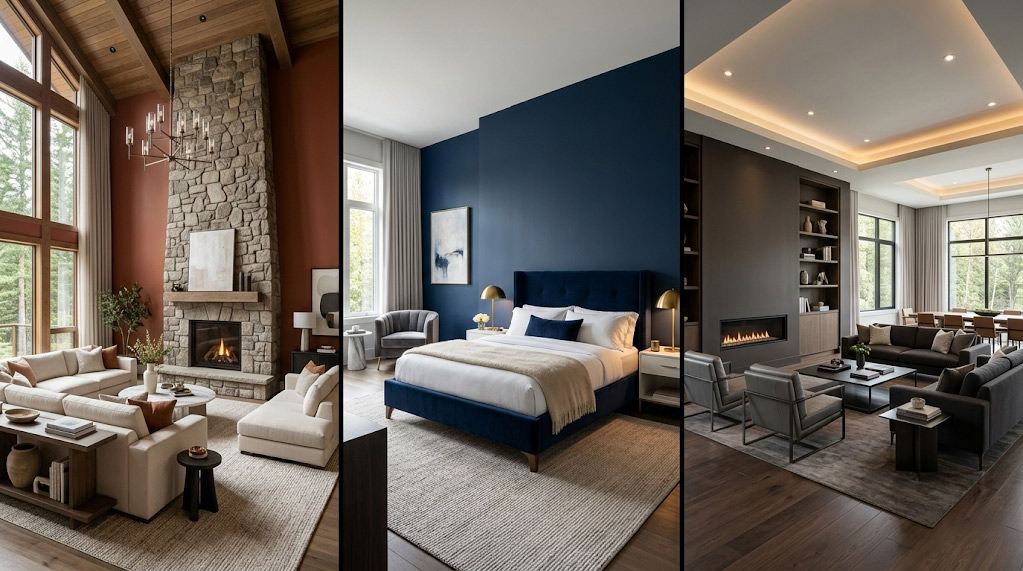
An accent wall is one of the smartest interior upgrades you can make — it anchors a room, draws the eye, and injects personality — without the expense or disruption of a full renovation. The problem? There are too many options. Between Pinterest mood boards and home-store aisles, it’s easy to feel paralyzed.
Picking the wrong material doesn’t just result in buyer’s remorse — it can lead to warping, cracking, peeling, or high maintenance long-term. This guide cuts through the noise. Below, you’ll find a realistic, design-savvy breakdown of the most popular, purchase-ready accent wall materials. I cover durability, maintenance, room-by-room suitability, design advice, and practical buying/installation tips so you know exactly what works for you.
How to Choose the Right Accent Wall Material (Before You Buy Anything) 🔎
Before falling for a trendy texture or dramatic photo, ask yourself these four questions. A good material choice balances aesthetics and your room’s conditions.
| Question | Why It Matters |
| What’s the room’s ecosystem? (humidity, traffic, light) | Wet rooms / high-traffic zones limit your material options — wood may warp; wallpaper may fail. |
| Do you need permanence or flexibility? | Cladding (wood, stone) locks in place; peel-and-stick or textured paint remain editable. |
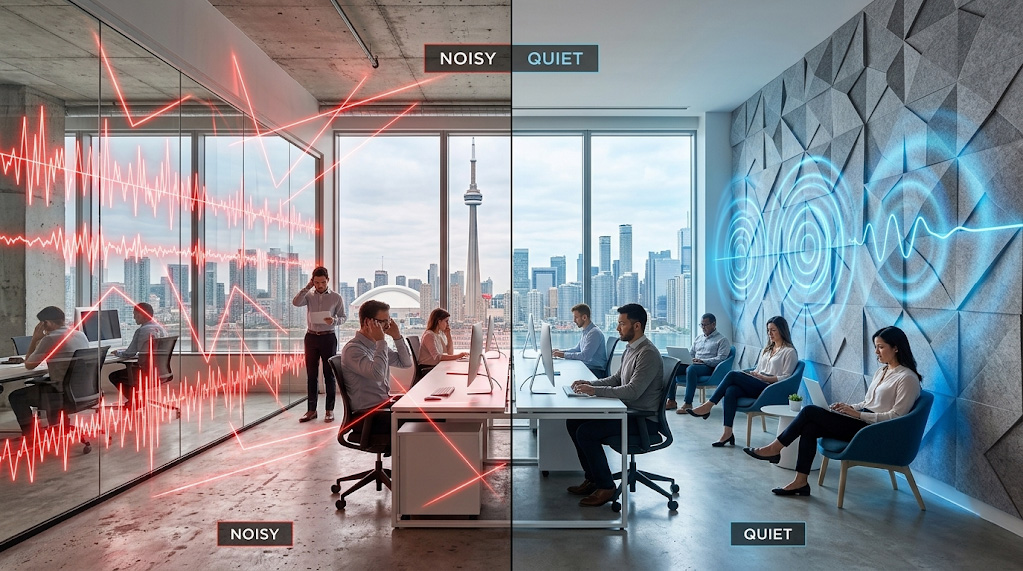
| Do you need sound control or just looks? | Some materials (acoustic slats, fabric panels) absorb sound — useful in media rooms or offices. |
| What’s your skill level / budget for labor? | Heavy materials or complex textures often need pro installation; simple MDF or wallpaper might work for DIY. |
Use this framework before browsing finishes — it helps eliminate materials that won’t suit your home regardless of how nice they look.
Popular Accent Wall Materials (And When They Actually Work)

Here’s a realistic breakdown of widely available accent wall materials — no gimmicks, just what’s out there in stores or from contractors.
| Material | Best For / Use Case | Pros | Cons / Caveats | Budget Range* |
| Wood Slat Panels / Wood Cladding | Home offices, media rooms, headboard walls | Warm, textured, often acoustic-friendly; easy to install on drywall | Grooves collect dust; real wood can fade in direct sunlight | Mid-range → Premium |
| MDF / Engineered Paneling (Shaker, Board-and-Batten, Geometric) | Living rooms, dining rooms, hallways needing architectural detail | Paintable, stable (no warping), impact-resistant | Sweats/swells with moisture — avoid bathrooms/kitchens without sealing | Budget-friendly → Mid-range |
| Decorative Mouldings & Wainscoting | Entryways, dining rooms, classic/traditional bedrooms | Adds elegance and historical character; protects walls from scuffs | Requires precise cuts, sealing, and painting work | Budget → Mid-range |
| Natural Stone / Stone Veneer | Fireplaces, rustic living rooms, feature walls | Luxury look, high durability, heat-resistant | Heavy; needs cement board or lath and pro installation; difficult to remove later | Premium |
| Brick / Brick Veneer (Real or Faux) | Industrial lofts, kitchens, urban-style apartments | Authentic texture, durable, can be painted | Dusty porous surface (needs sealing), rough texture hard to hang art on | Mid-range |
| Wallpaper / Peel-and-Stick Panels | Rentals, nurseries, powder rooms, flats | Huge design variety, removable, DIY-friendly | Can peel in humidity; cheap vinyl may look fake; requires very smooth walls | Budget → Mid-range |
| Textured Plaster or Paint Finishes (limewash, Venetian plaster, microcement, subtle textured paint) | Minimalist spaces, feature walls, walls with flaws | Soft, artisanal finishes; hides imperfections; no wall depth added | Requires skill; heavy textures hard to repair or repaint | Budget (DIY) → Premium (pro) |
| Fabric / Upholstered / Acoustic Panels | Bedrooms, media rooms, offices needing sound dampening | Soft, cozy, improves acoustics, luxe feel | Collects dust; stain-prone; specific aesthetic (can look “hotel-like”) | Mid-range → Premium |
| Concrete / Microcement / Cement-Look Finishes | Industrial lofts, modern kitchens/lounges | Seamless, modern, cool aesthetic; durable finish | Cold feeling; needs skilled labor; cracking possible if substrate imperfect | Mid-range → Premium |
| 3D Wall Panels (MDF, Gypsum, PVC) | Commercial spaces, feature walls, modern interiors | High visual impact, fast install (especially PVC), some waterproof options | Dust in crevices; can look cheap if poorly finished; cleaning hard | Budget (PVC) → Mid-range (Gypsum) |
* “Budget-friendly / Mid-range / Premium” are relative terms, not exact prices — actual costs vary by material quality, finish, region, and labor.
Highlights and When to Use What
- Low-budget, high-impact: MDF paneling, peel-and-stick wallpaper, simple plaster texture
- Mid-range, sturdy, classic look: Wood slats, wainscoting, brick veneer, 3D PVC panels
- Premium, long-lasting, statement-making: Real stone veneer, concrete/microcement, high-end textured plaster, acoustic panels
Interior Wall Paneling Ideas for Modern Accent Wall Design

Here are some real-world design ideas that consistently work — no over-the-top concepts, just smart, timeless looks.
- Light-Oak Slatted Wall (Japandi or Modern Minimalist Style)
Use vertical wood slat panels for half of the wall (e.g., behind a sofa or bed), pairing with a neutral paint on the other half. Creates texture + tranquility. - Dark Painted Grid with MDF Strips
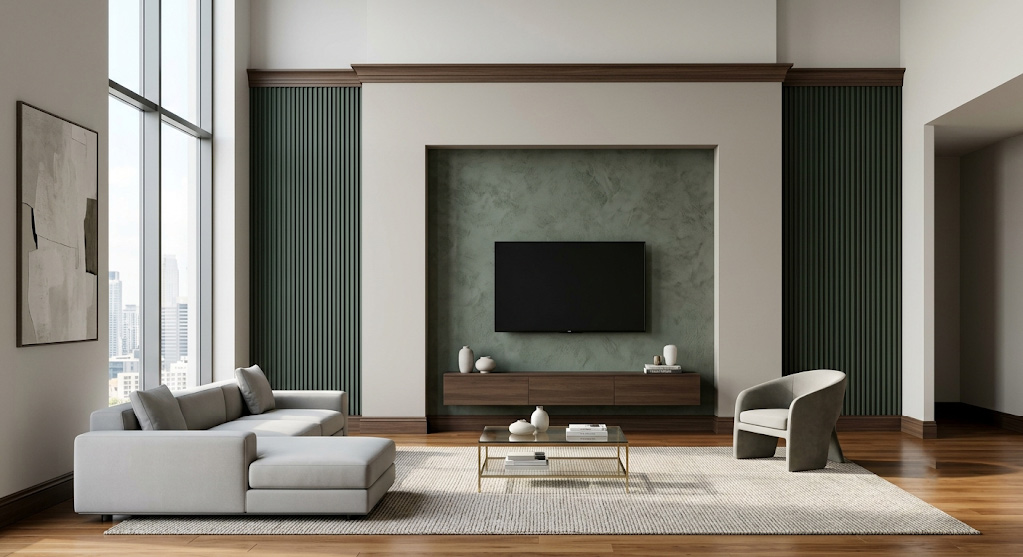
Create a floor-to-ceiling geometric grid using MDF battens painted in a deep, matte tone (charcoal, navy, forest green). Ideal behind media consoles or in dining rooms for dramatic, modern contrast. - Half-Height Wainscoting + Painted Upper Wall
Elegant and timeless — white or soft neutral wainscoting with a muted upper wall in tranquil color. Great for bedrooms, dining rooms, or traditional homes. - Stone Veneer Accent Around a Fireplace or Wine Storage Column
Use a vertical column of natural or manufactured stone veneer to draw the eye — adds rustic elegance or cozy lodge vibe, especially in living rooms or entryways. - Peel-and-Stick Wallpaper in Rental Apartments / Nursery / Powder Rooms
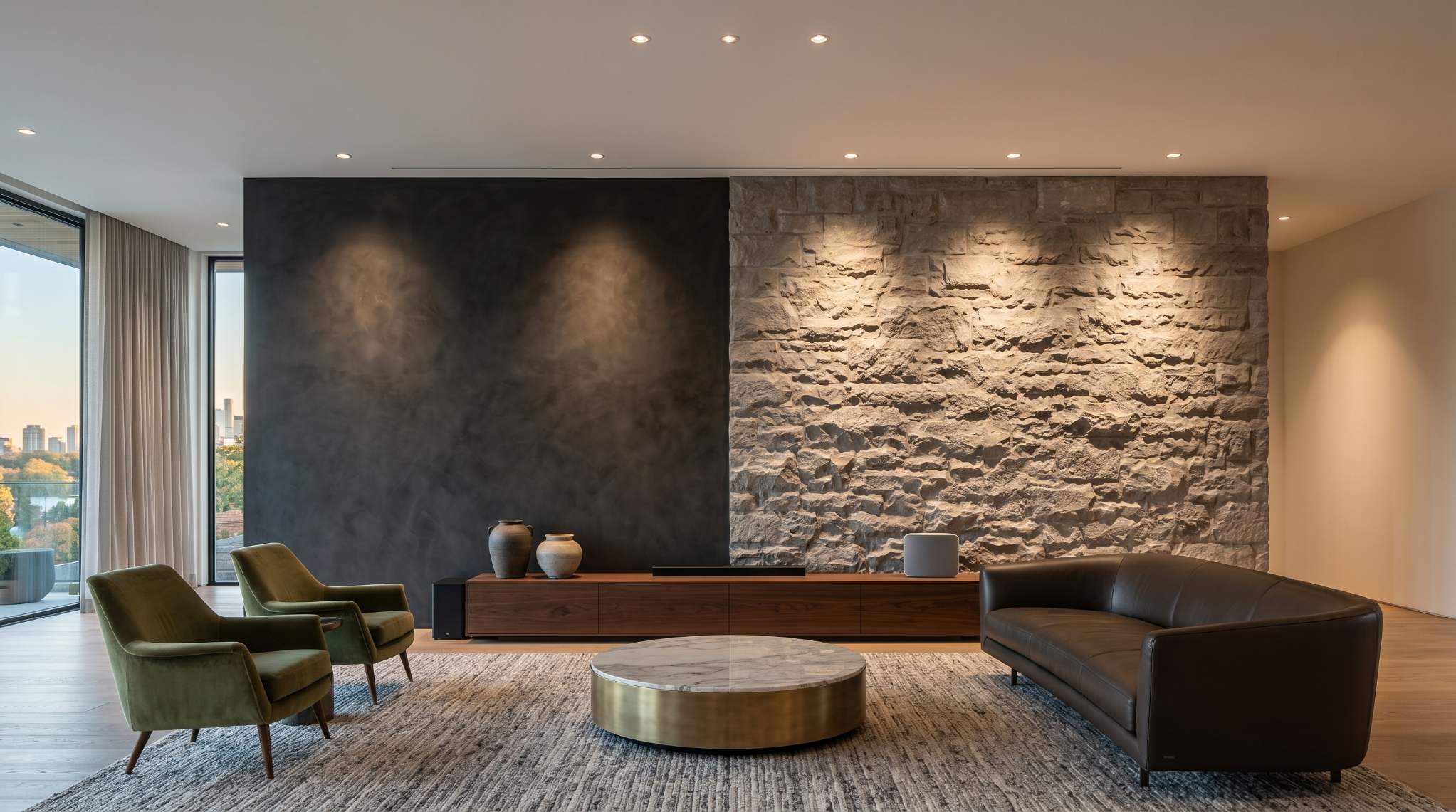
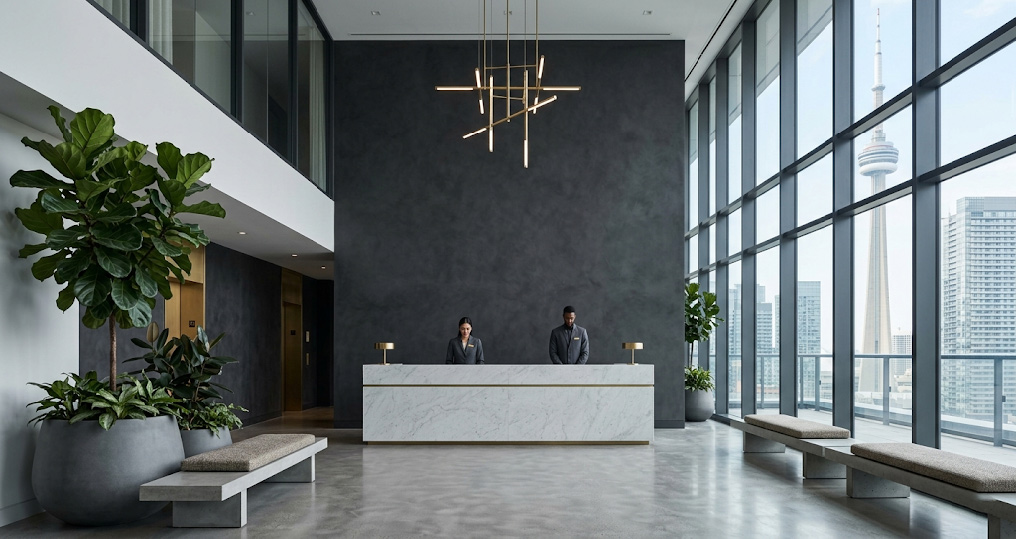
Affordable, removable, and high variety — perfect for renters or temporary design refreshes. Works well for feature walls, ceilings, or accent niches. - Textured Plaster or Microcement Finish on Tall Walls
Use soft plaster textures or microcement on an entire wall for a contemporary, sophisticated finish. Great for lofts, minimalist living rooms, or offices. - Acoustic Fabric Panels in Home Theatres or Offices
For media rooms or work-from-home offices — fabric-wrapped acoustic panels deliver sound dampening and a plush, luxe look.
Artistic Wall Textures with Paint (When You Don’t Want Permanent Panels)

Not all accent wall materials are boards or veneer — some are creative paint or plaster finishes that deliver great aesthetic value with minimal installation.
Realistic techniques you can request today:
- Limewash / Mineral Wash: Creates soft, chalky, mottled finishes — great for rustic or “old world” charm.
- Venetian Plaster: Multiple thin layers of plaster burnished for a smooth, marble-like sheen — elegant for living rooms or formal spaces.
- Microcement / Cement-look Coating: Thin cement-based coatings applied over drywall for a seamless, industrial aesthetic.
- Soft Roller or Texture Additives: Subtle textures that hide wall imperfections or add light vibration — often used in Scandinavian/modern interiors.
Best for: Feature walls, fireplace walls, tall walls, rental spaces (if using removable or paint-over techniques).
Avoid for: Small rooms (heavy texture shrinks perceived space), poorly-prepared walls, cheap rental units without surface repair tolerance.
Matching Accent Wall Materials to Room Types

| Room Type | Recommended Materials | Why They Work |
| Living Room | Stone veneer, wood slat panels, MDF geometric grid | Creates strong focal point for sofa/TV, adds texture and character |
| Bedroom | Fabric/acoustic panels, soft plaster, wallpaper, wood slats | Enhances comfort, sound dampening, restful atmosphere |
| Kitchen / Dining | Painted board-and-batten, brick veneer, microcement, tile/stone | Moisture/humidity tolerance, easy to clean, durable surfaces |
| Bathroom / Laundry / Wet Rooms | Tile, PVC 3D panels, sealed stone/brick veneer, microcement | Waterproof or moisture-resistant materials required |
| Home Office / Media Room | Acoustic slats/panels, wood cladding, matte painted textures | Sound control, professional backdrop for calls, minimal glare |
| Hallway / Entry / High-Traffic Zones | Wainscoting, MDF paneling, brick/stone veneer (sealed), smooth plaster | Durable, protective against scuffs, easy to clean |
Note: Always consider room humidity, ventilation, and wall substrate before finalizing material choice.
Practical Buying & Installation Tips (So You Don’t Regret Your Choice)

Before you hit “buy,” check these critical items:
- Wall condition & substrate — uneven or textured drywall needs skim-coating before veneer or wallpaper.
- Moisture and ventilation — avoid untreated wood or MDF in humid zones; use sealed, water-resistant options.
- Fire rating & safety — around fireplaces or heat sources use stone, tile, or fire-rated cladding.
- Acclimatization for wood products — let wood panels sit in your room 48–72 hours before installation to adjust to humidity.
- Buy extra material — always order 10–15% more than calculated area to account for cuts, errors, and pattern matching.
- Adhesive & fixing compliance — heavy veneers need cement board or lath; light peel-and-stick may stick poorly on rough walls.
- DIY vs Professional Installation — simple MDF or peel-and-stick may suit DIY; heavy materials, stone, microcement best left to professionals.
Conclusion — Choose Smart, Not Trendy
Accent walls aren’t merely a fad. When you choose a material that suits your room’s conditions, lifestyle, and maintenance tolerance — you get a long-lasting, beautiful feature that elevates your space.
Before you buy: consider moisture, ventilation, room function, and how permanent you want the change to be. Use this guide to compare materials rationally — not just beautifully.
If you’re ready to refresh your walls, a strategic accent wall (in wood, stone, plaster, or textured finish) remains one of the highest-value upgrades for any home or small commercial space.
Take your time, pick your material wisely — and you’ll enjoy the reward every time you walk through the door.
Frequently Asked Questions (FAQ)
What is the most budget-friendly accent wall material?
Paint-based textures and simple MDF paneling (board-and-batten, geometric strips) are the most affordable. Peel-and-stick wallpaper is also a budget-friendly, temporary option.
Are wood slat wall panels good for sound absorption?
Yes — if they’re designed for acoustics (wood slats mounted on felt or recycled PET backing). That backing is what absorbs and reduces echo. Solid wood or veneer slats without acoustic backing mostly add aesthetics, not sound control.
Can textured wall paint be repainted or removed easily?
Subtle textures (like limewash or soft roller finishes) generally can be primed and painted over. Heavy textures or plaster finishes often need sanding or a skim-coat before repainting.
Which materials work best in humid rooms (bathrooms, laundry rooms)?
Water-resistant options like porcelain tile, sealed stone veneer, microcement, PVC or polystyrene 3D panels are suitable. Avoid untreated wood, MDF, or unsealed plaster.
How do I choose between wall paneling and textured paint?
Use paneling when you want architectural definition, structure, or strong texture (slats, grid, stone). Use textured paint when you want subtle depth, easy changeability, or smoother surfaces without added wall thickness.
Are accent walls still modern — or are they outdated?
Yes — but the style has evolved. Instead of loud, contrasting “painted rectangle” walls, modern accent wall design leans toward texture, tone-on-tone finishes, and material contrast (wood, stone, soft plaster).
Are 3D wall panels durable?
It depends on material. PVC 3D panels tend to be waterproof and resistant to moisture but can dent under heavy impact. Gypsum or MDF 3D panels offer sturdiness but may be heavier and harder to install. Always check panel specifications and intended use.